
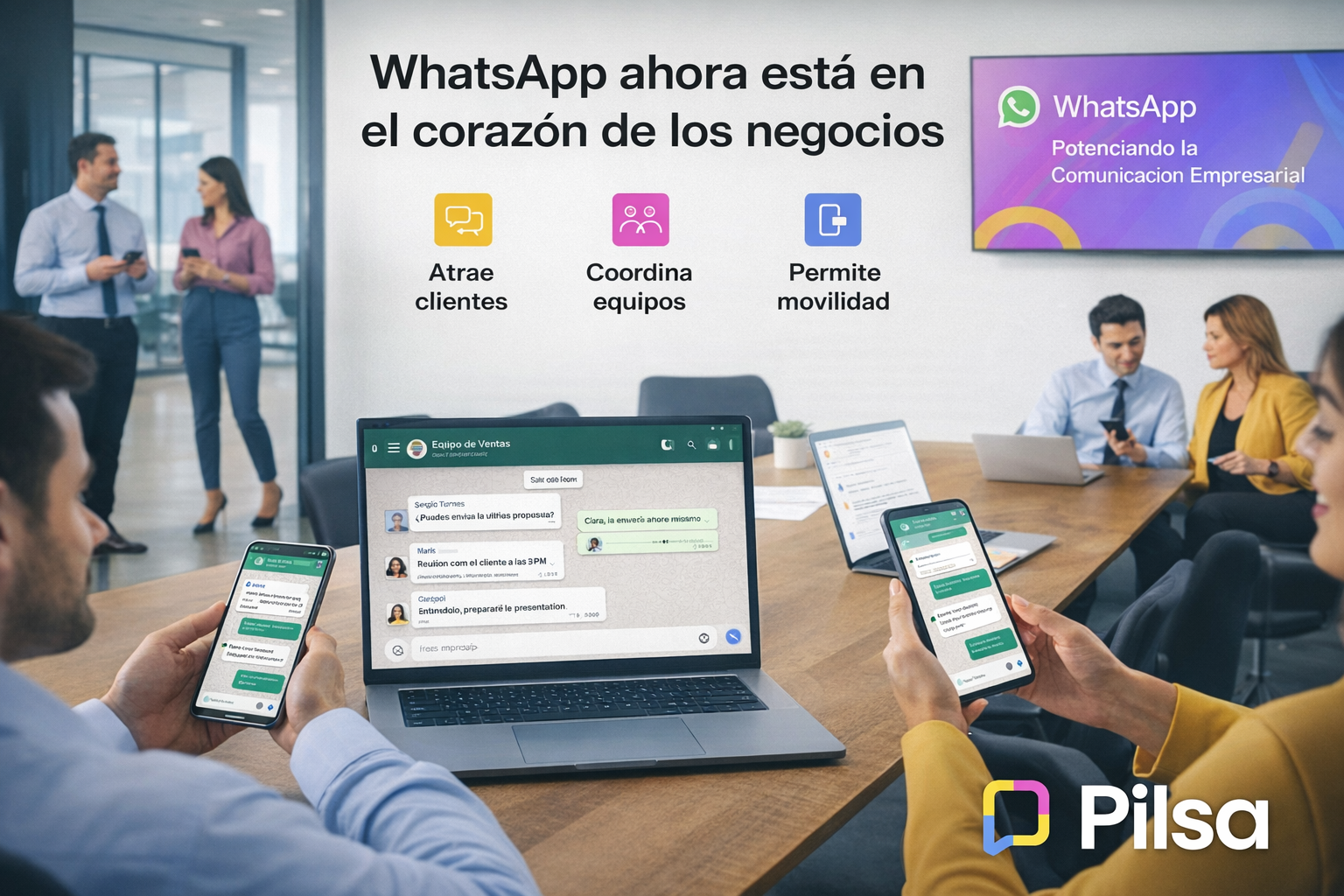
For years, corporate training has been designed around complex platforms, long sessions and special moments for learning. However, the reality of work has changed. Today employees are constantly on the move, with packed agendas, multiple communication channels and very little time to sit down in front of a traditional course. In this context, WhatsApp stopped being just a personal messaging tool and became one of the most effective channels for organizational communication. The question is no longer whether WhatsApp can be used for training, but why it works so well when designed correctly. This course explains the foundations, advantages and principles that make WhatsApp a powerful channel for corporate learning, especially when combined with microlearning and action-focused instructional design.
WhatsApp is already part of everyday life for employees
One of the biggest mistakes of traditional training is trying to bring the employee into a new environment: one more platform, one more username, one more password.
- WhatsApp removes that friction.
- It is already installed
- It is already used every day
- It is already part of the work and personal routine
- It requires no technology learning curve
This means that training does not compete for attention, but fits into the natural flow of the day to day. Learning stops being a separate event and becomes an extension of everyday communication.
When the channel is familiar, resistance drops and participation rises naturally.

Learn at the right moment, not later
Most traditional courses fail for a simple reason: they teach too far from the moment the knowledge needs to be applied. WhatsApp makes it possible to deliver learning:
Right before a task
During a process
As immediate reinforcement
As a practical reminder
This approach, known as learning in the flow of work, dramatically increases the likelihood of application. The employee does not have to remember what they saw weeks ago; they receive the capsule while the context is still present. Learning on WhatsApp is not about accumulating information, it is about solving real situations in real time.

Microlearning and WhatsApp: a natural combination
WhatsApp is not designed for long or complex content. And that is precisely its strength.
It works best with:
Short messages
Short videos
Concise audio
Clear images
Direct questions
This forces content to be designed with a microlearning approach, where each capsule has a specific function: to explain, reinforce or trigger a concrete action.
Instead of lengthy courses, learning paths are built from micro-content that respects the time of employees, holds attention, makes repetition and reinforcement easier, and reduces cognitive overload. WhatsApp not only supports microlearning, it demands it, and that raises the quality of instructional design.
Higher open rates and real consumption
One of the great challenges of traditional e-learning is that many courses are assigned but not really consumed. They are completed out of obligation, not interest. On WhatsApp the opposite happens.
Notifications get opened
Messages get read
Audio gets listened to
Videos get played
Open rates on WhatsApp are significantly higher than on email or traditional LMS platforms. This does not guarantee learning by itself, but it creates the necessary condition: attention.
When the message arrives directly, clearly and briefly, the employee engages with it without feeling like they are entering one more course.
Closeness, a human tone and trust
WhatsApp is a conversational channel. It is not perceived as a cold or institutional platform, but as a close space.
This allows more human language, clear and direct messages, less technical jargon and a greater sense of support.
Training stops feeling like an imposition and is perceived more as a practical guide. This closeness strengthens trust, a key element for adult learning.
When the tone is right, the employee feels that the training speaks to them, not to a generic audience.
Flexibility without losing structure
A common mistake is thinking that training through WhatsApp means improvising or sending messages with no order. In reality, for it to work, it requires more design, not less.
An effective program on WhatsApp has clear objectives, follows a logical sequence, defines frequency and duration, sets interaction rules and integrates measurement and follow-up.
The difference is that this structure does not feel heavy. Learning flows, but it responds to a solid pedagogical architecture.
WhatsApp does not replace the training strategy; it carries it out in a more agile way.
Training via WhatsApp works because it respects how people work today. It does not force a change of habits, does not compete for artificial time and does not separate learning from the reality of work.
It works because it reaches people where they already are, delivers actionable content, fits into the flow of work, uses microlearning naturally, builds closeness and trust, reduces technology friction and increases the likelihood of real application.
WhatsApp is not the future of training by itself, but it is one of the most powerful channels when used with pedagogical intent and strategic design.
Learning does not need to be more complicated.
It needs to be more relevant, more timely and more human.