

Salespeople who spend the day visiting clients, technicians who work in shifts, cashiers, delivery drivers, plant staff. A good part of the people who keep a company running do not work in front of a computer. Even so, many courses are designed for someone with free time, a computer and a good connection.
We know the result well: courses nobody finishes, forgotten passwords, in-person sessions that force a store to close or shifts to be moved, and supervisors who end up explaining everything by word of mouth.
The good news is that operational staff do learn, and learn fast, when the format adapts to their reality. In this article I share what works.
The problem is not the people, it is the format
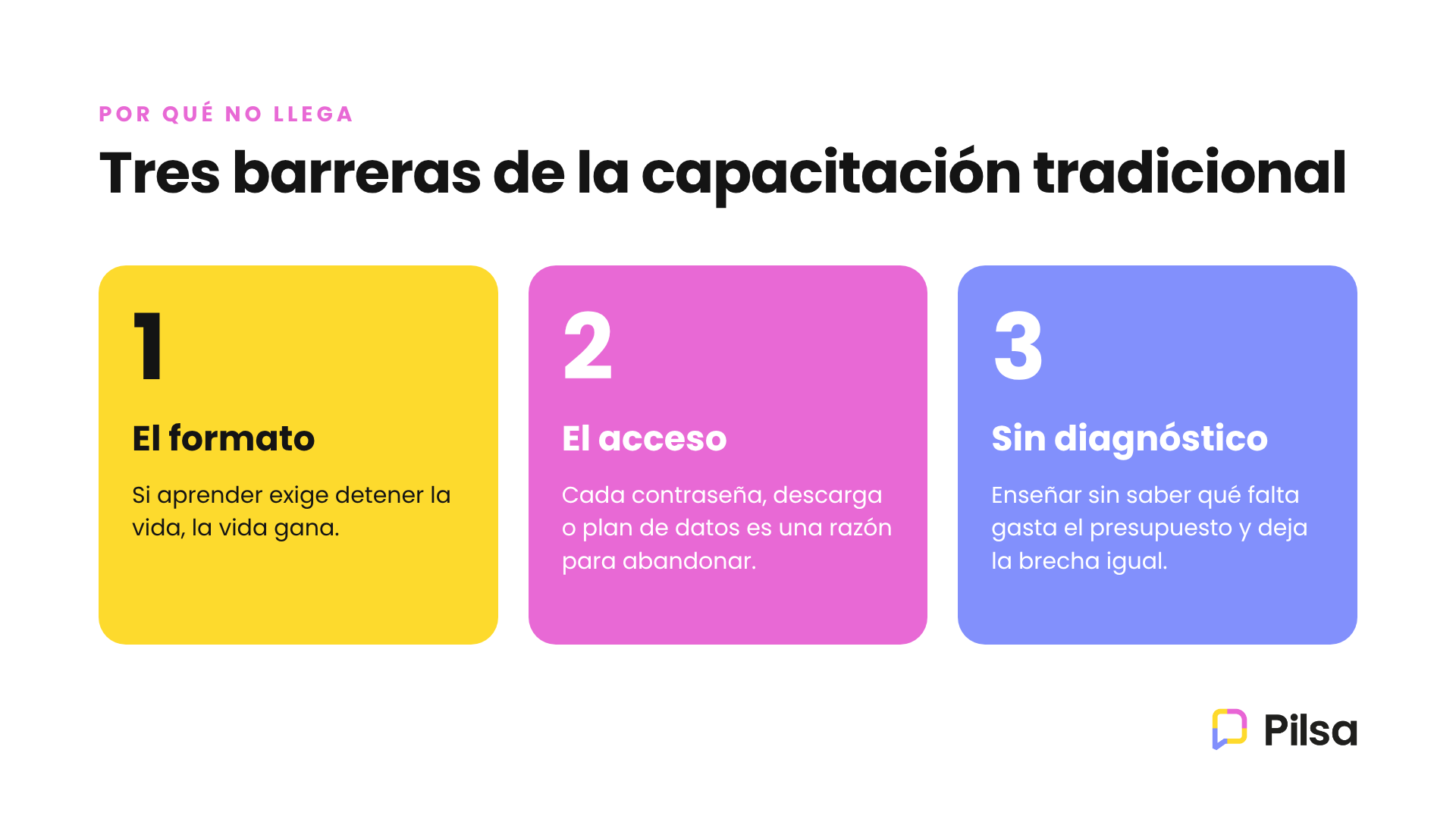
When a training program has low participation among operational staff, the usual conclusion is that people are not interested in learning. In our experience that is almost never the case. What happens is that we ask them to learn under conditions that do not exist in their day to day:
- A platform that demands a username, a password and a computer they do not have.
- Courses of one or two hours when their free time comes in ten-minute breaks.
- Long texts to read when their work is practical and visual.
- Fixed-schedule sessions that clash with rotating shifts.
If you change the format, participation changes.
On top of this comes a third barrier: teaching without knowing what is missing. Many organizations choose the course before getting to know their people. As a result, some repeat what they already master and others are left without what they truly need.
What does work in the field
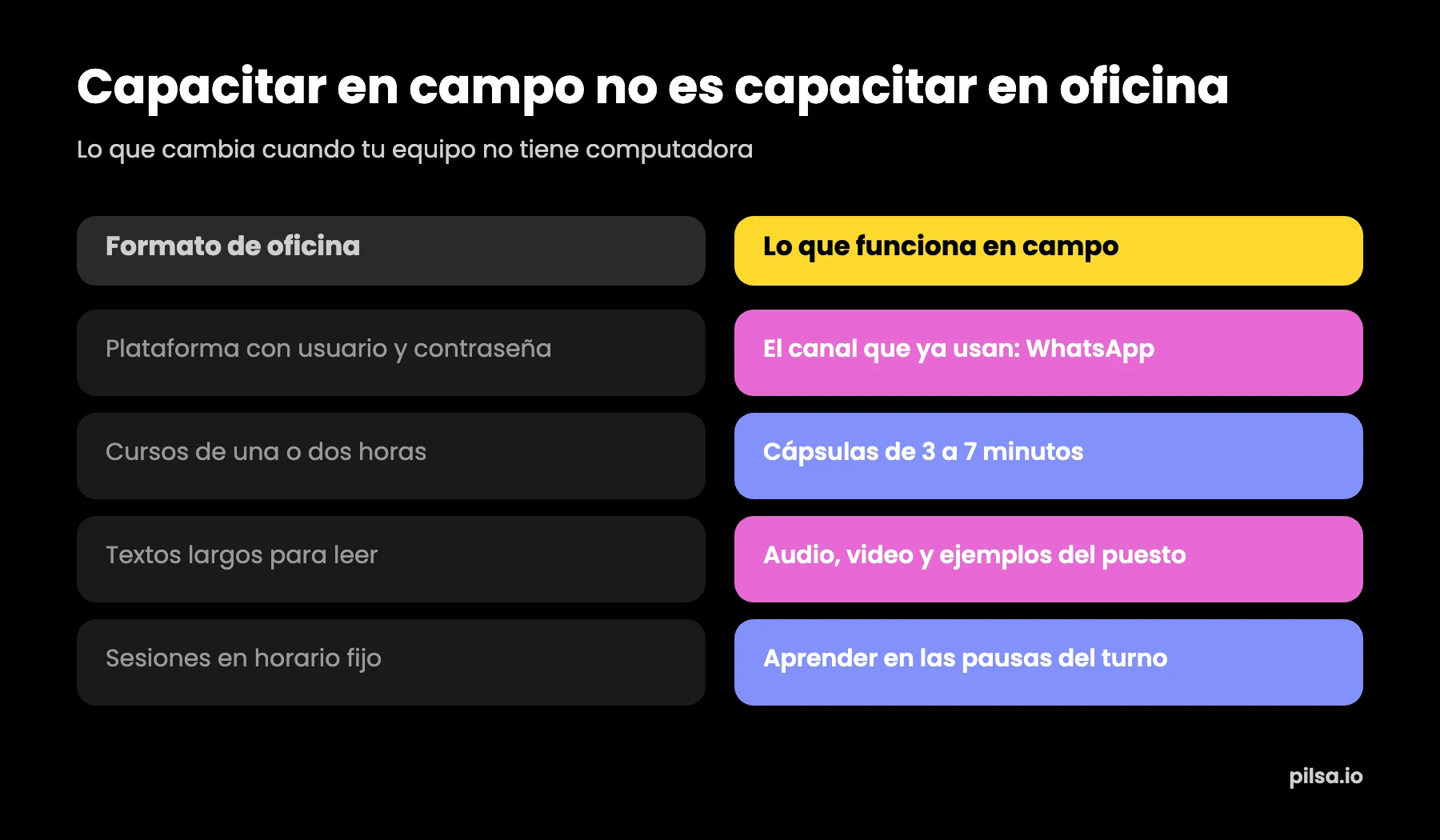
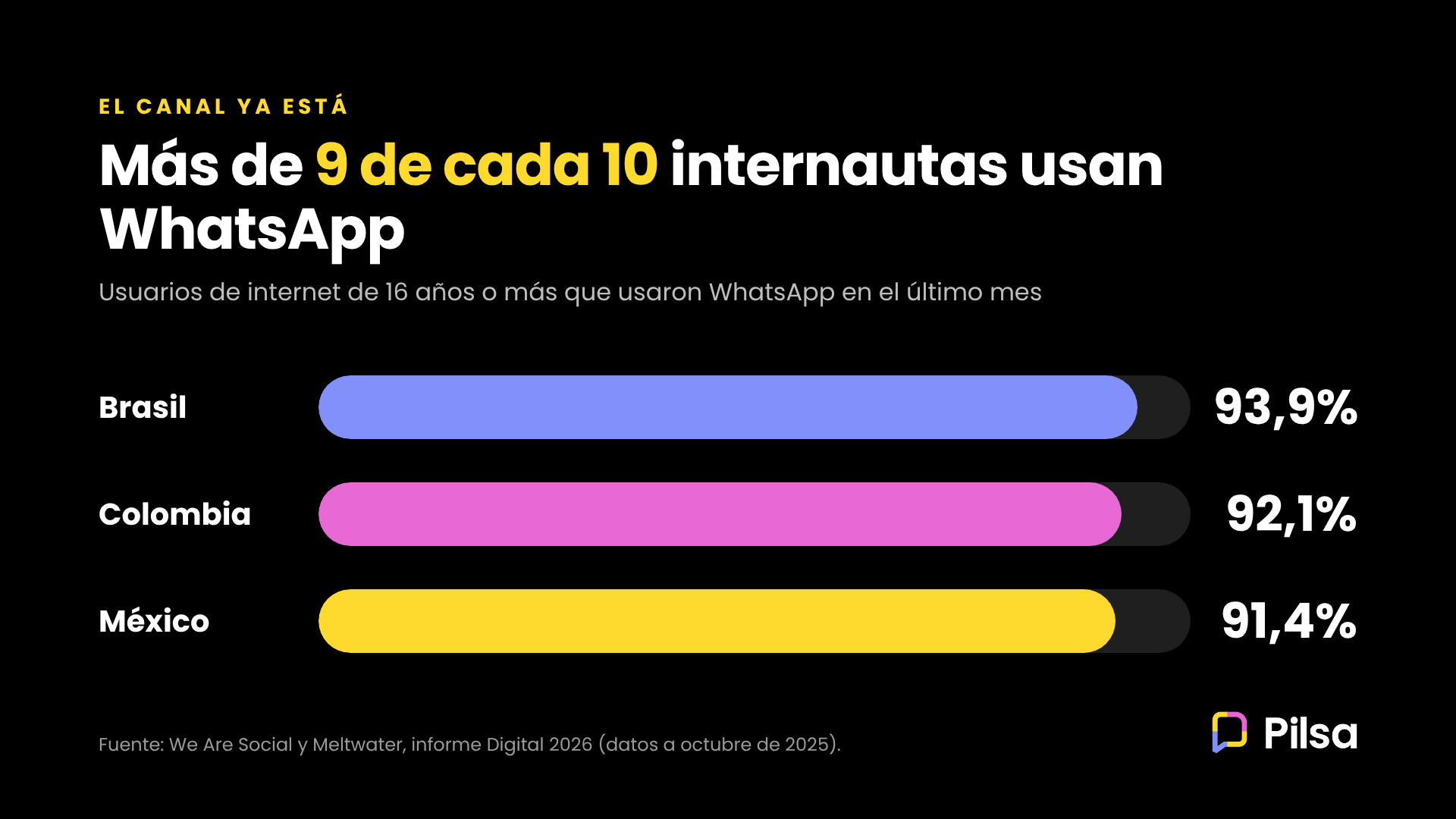
The channel they already use. According to the Digital 2026 report by We Are Social and Meltwater, more than 9 out of 10 internet users in Brazil, Colombia and Mexico used WhatsApp in the last month. Bringing training there removes the entry barrier: nothing to install and no passwords to remember.
Capsules of 3 to 7 minutes. One topic per capsule, with a clear objective. It is the time that fits in a break during the shift or on the commute to work. If you want to go deeper, here I explain the benefits of microlearning for companies.
Audio, video and examples from the job. A voice note from the supervisor explaining how to handle a return is remembered better than a ten-page manual. Short videos recorded at the workplace, even with a phone, create much more identification than generic content.
A question at the end of each capsule. It confirms that the idea is clear and gives you data on who masters the topic and who needs reinforcement.
Five rules for designing operational content
- One action per capsule. If the content does not change something the person does during their shift, it is unnecessary.
- Language of the job. Use the words used in the store or on the plant floor, not those of the corporate area.
- Show before explaining. First the real example, then the rule.
- Steady rhythm. Two or three capsules a week work better than one intensive day-long block.
- Lightweight formats. Compressed videos and light images, keeping limited data plans in mind.
The supervisor is the key ally
No format replaces the supervisor. They are the one who knows the mistakes that keep repeating, who can publicly recognize someone who applied what they learned and who sets the example. When the supervisor receives the content first and knows what their team is learning, training stops being something that human resources sends and becomes part of the operation.
A good habit is to give the supervisor a simple weekly summary: who moved forward, who fell behind and which topic was hardest. With that, they can reinforce at the start-of-shift meeting without preparing anything extra.
You can see results from our programs in our success stories.
Where to start
Before producing content, identify what each group needs to learn. A short training needs assessment, done through the same channel, saves you from producing capsules nobody needed. Then choose one critical topic, create four or five capsules and test them with a single team for two weeks. The results of that pilot will tell you how to scale.
If you want to go deeper into the topic, you may also find useful how to train teams without stopping operations y why training via WhatsApp works.
A question before approving your next training plan
Can the person who needs this course the most take it, from where they are and with the time they have? If the answer is no, it is worth reviewing the format before approving the budget.
At Pilsa we design training programs for operational teams using WhatsApp and our platform, with tracking per person and reports for supervisors. If you want to see how it would look with your team, book a demo.